
The Guilt-Free Guide to Screen Time (From a Family That Figured It Out)
I used to stress about screen time like other parents stress about sugar: hours per day, app categories, research articles that made it worse. When our son asked to play Minecraft, I’d feel that familiar tug: is this too much? Am I messing up?
Then one afternoon, I actually watched what he was doing instead of just seeing a screen, and everything shifted.
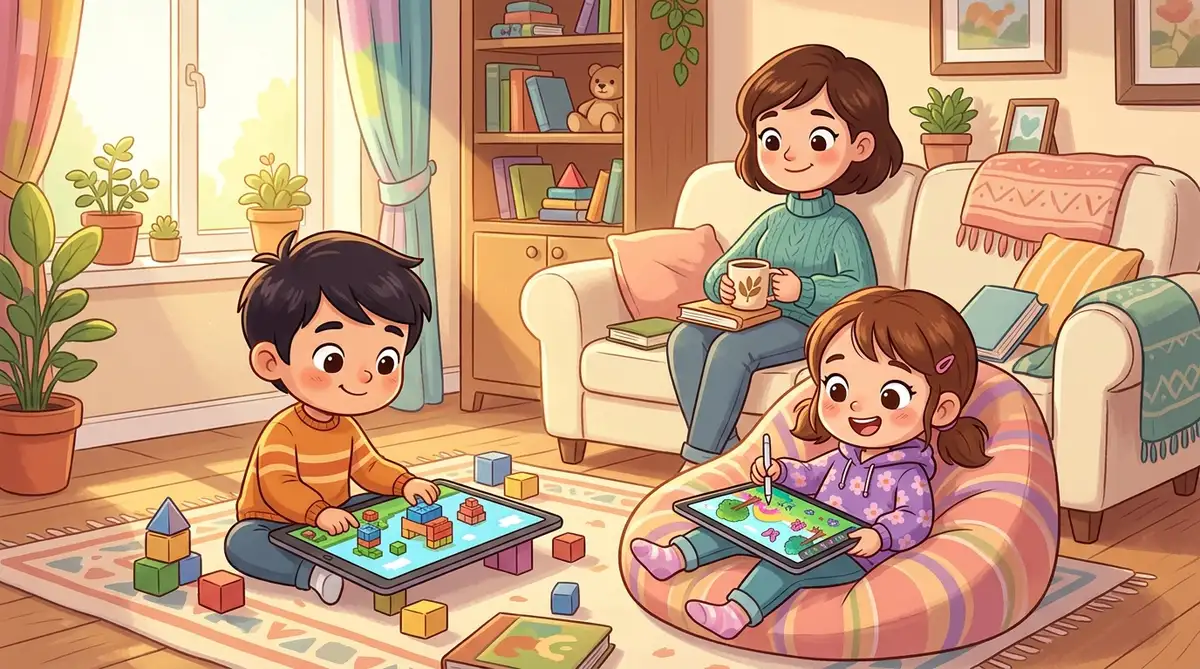
He was building a treehouse in creative mode. First sketching on paper, calculating blocks, redoing sections to match his blueprint. His sister narrated what to do next (he ignored her). When finished, he explained the entire design.
That’s not screen time. That’s architecture, design thinking, and math wrapped in something he loved.
The Screen Time Myth
Everyone talks about “screen time” like it’s one thing. An hour of Minecraft equals an hour of YouTube recommendations? A learning app counts the same as doom-scrolling? That framing was making me crazy.
Here’s what actually matters:
Active screens (creating, building, solving): Minecraft, drawing apps, coding, writing, strategy games, educational videos they chose to watch.
Passive screens (consuming, watching): YouTube in the background, random scrolling, half-watching while bored.
Our rule shifted from “X hours per day” to “what are you actually doing and why?” Our son spends three hours in Minecraft with sketches and built things to show. Fifteen minutes of mindless YouTube leaves him restless and unsatisfied.
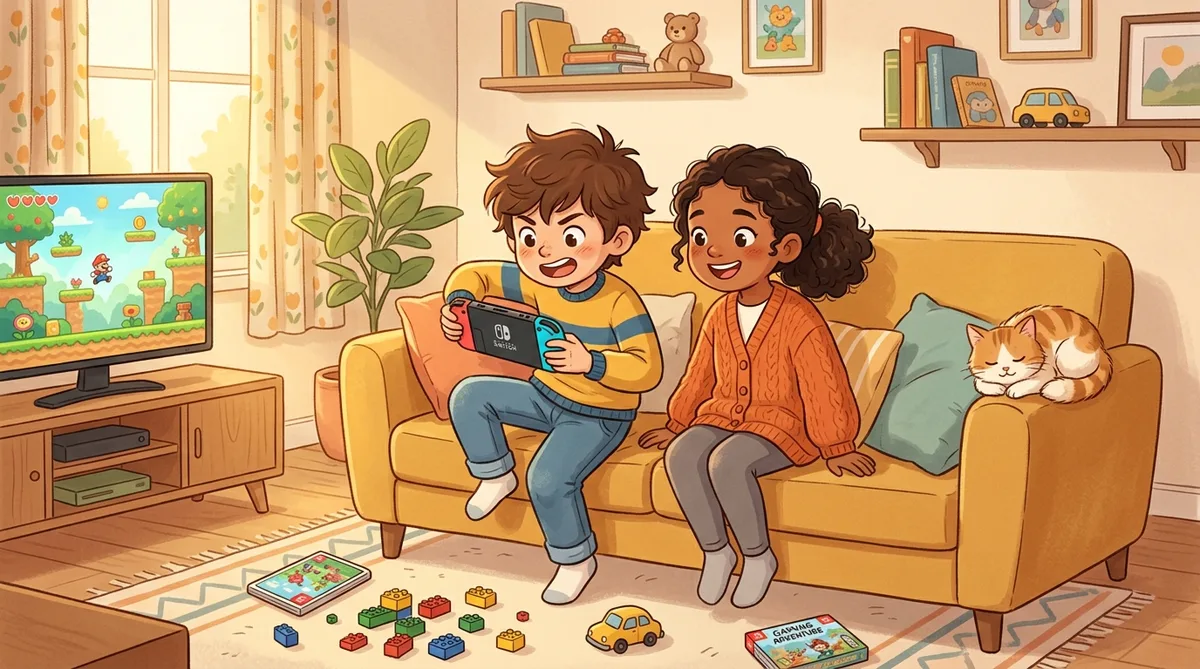
Our daughter is different. She plays a cozy Nintendo game for 20 minutes and stops naturally. She’d work through physical workbooks for hours if we let her.
**Watch your kid (actually watch) and ask yourself:**
- Are they creating something, solving a problem, or building?
- Did they start this on their own or are they just killing time?
- Can they explain what they're doing and why?
- Do they feel satisfied when they stop, or itchy?

Your answers matter way more than the clock.
What Actually Happens in Our House
Monday afternoon: our son asks to play Minecraft. I ask what he’s building and he shows me the blueprint, explaining his design. Three hours later, he shows me the finished thing.
Wednesday evening: he finds a YouTube video on Redstone circuits (poorly explained at school) and watches twice, pausing to test things in the game. That’s learning. Screen time working for him.
Sunday morning: our daughter plays a cozy farming game, completes tasks, gets bored, moves on without asking. That’s healthy.
Sunday evening: our son finds a long video of someone playing Minecraft with no plot or narration. I watch the glazed look set in. After 10 minutes, I ask, “Is this interesting or are you zoning?” He admits: zoning. We close it.
The difference? One builds something. The other numbs him out. Same device, totally different outcomes.
- Notice whether your kid is creating or consuming
- Ask them what they’re doing (they’ll usually tell you)
- Distinguish between “learning” screen time and “zoning” screen time
- Don’t ban either one, but be honest about what it is
- Set expectations around stopping points, not time limits
The “Show Me What You’re Doing” Approach
We stopped asking “How long have you been on there?” and started asking “What are you building/playing/working on? Show me.”
This does three things:
-
It breaks the passive spell. When a kid has to explain what they’re doing, they suddenly notice whether it’s actually interesting or if they’re just escaping.
-
You actually learn what matters to them. Our son will spend 15 minutes explaining Minecraft mechanics I don’t understand because he’s INTERESTED. Our daughter will show you her game farm like it’s a real business (which in her mind, it is).
-
It gives you real information. You see whether they’re learning, creating, socializing (yes, some games are that), or zoning. No guessing required.
The guilt goes away when you know what’s actually happening.
What the Research Actually Says
The research doesn’t say “screens are bad.” It says active screen time is fine (sometimes great), passive screen time is less helpful, and extreme isolation is the problem. A kid who creates, learns, goes outside, reads, plays with friends, and does hands-on stuff? That kid is probably fine.
Our rule: screens are fine. Screens instead of everything else is not. Our son can spend his afternoon in Minecraft IF he also goes outside, reads, does chores, plays with his sister, eats real meals, and sleeps. It’s not either/or. It’s everything.
The Real Conversation to Have
Stop asking “Is my kid on screens too much?” Ask instead:
- Are they creating or consuming?
- Do they seem happy and interested, or escaping?
- Is this their choice or am I using it as a babysitter?
- Are they also reading, going outside, doing hands-on stuff, playing with people?
The screen is just a tool. What matters is what they’re building, learning, becoming.
That’s when the guilt melted for us. Once we stopped counting hours and started paying attention, we realized our kids were actually fine. And screens, used right, were helping.
Want to know what our son actually learns from Minecraft? We broke down how it became his math textbook. Read: Minecraft as Math Textbook
Share this article
If this helped, pass it along.